
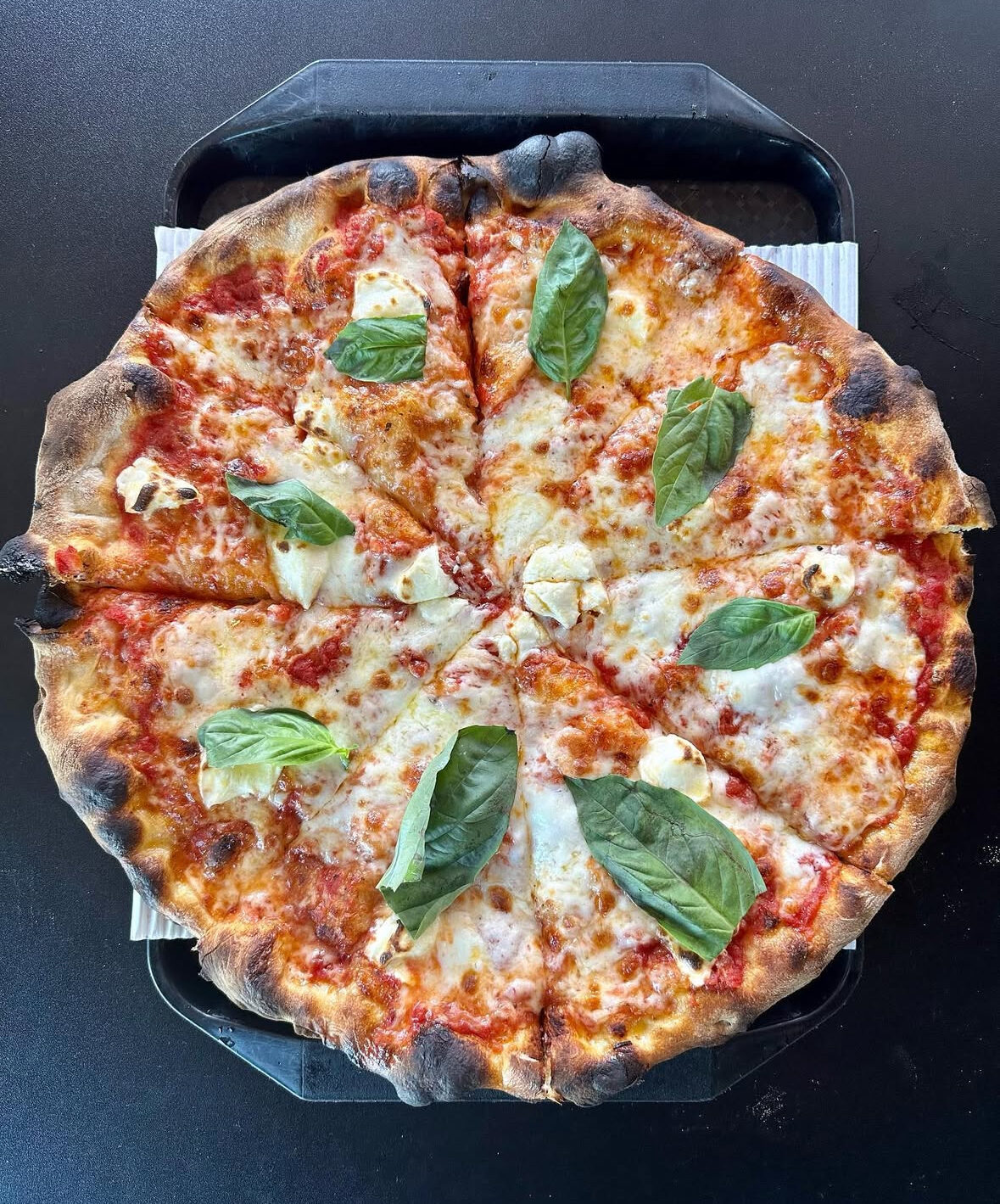
3 Day Poolish Pizza Dough: Why This Fermentation Method Is Rare in Columbus
3 day poolish pizza dough is not a phrase you see often in Columbus pizza conversations.
However, it is the foundation of how Sexton’s Pizza builds flavor, structure, and consistency into every slice.
This long fermentation method behaves a little like sourdough, and it explains why Sexton’s pizza tastes noticeably different.
Instead of prioritizing speed, Sexton’s commits to time.
Their poolish ferments for three full days before final dough is even mixed.
As a result, that decision shapes everything that follows.
What 3 Day Poolish Pizza Dough Actually Means
Poolish is a pre-ferment made from flour, water, and yeast.
In many pizza operations, poolish is used briefly or skipped altogether.
By contrast, 3 day poolish pizza dough allows fermentation to develop slowly and naturally over several days.
During this time, the poolish builds acidity, strength, and flavor complexity.
The process resembles sourdough fermentation, although it typically uses commercial yeast instead of wild cultures.
For a technical explanation of poolish, King Arthur Baking offers a clear overview:
What is a poolish and why bakers use it
.
Why 3 Day Poolish Pizza Dough Is Rare in Columbus
A three-day fermentation window introduces risk.
Temperature control matters.
Timing matters.
Consequently, small mistakes compound quickly.
For that reason, many pizza shops avoid this approach entirely.
Columbus has no shortage of great pizza, but most doughs favor predictability and speed.
3 day poolish pizza dough does the opposite.
It limits flexibility while improving depth of flavor and crust structure.
According to Serious Eats, extended fermentation enhances both flavor and digestibility in pizza dough:
How fermentation affects pizza dough flavor
.
How 3 Day Poolish Pizza Dough Changes the Final Slice
Dough built with a three-day poolish bakes differently.
The crust develops strength without toughness.
Air pockets form naturally.
Likewise, flavor comes from fermentation rather than sugar or additives.
With 3 day poolish pizza dough, the slice tastes finished before toppings are added.
That balance is especially important for Brooklyn-style pizza, where restraint defines quality.
With 3 day poolish pizza dough, the slice folds without cracking, stays warm longer in your hand,
and finishes with a clean chew that never feels heavy.
The Brooklyn-Style Connection
Brooklyn-style pizza relies on dough that can stretch thin without tearing while still holding structure.
Achieving that balance requires fermentation that builds gluten gradually.
This philosophy aligns with Brooklyn pizza culture.
Rather than copying recipes, Sexton’s adopts the mindset by prioritizing time, repetition, and fermentation discipline.
Why This Method Works at The Little Grand Market
Introducing slices often pressures pizza operations to simplify.
Sexton’s avoided that compromise by bringing 3 day poolish pizza dough into an environment that values craft.
At The Little Grand Market, Sexton’s maintains its fermentation schedule while serving a broader audience.
The format changed. The dough did not.
For the full context behind Sexton’s arrival, start with the anchor article:
Why Sexton’s Pizza at The Little Grand Market Is Not “Just Another Slice Shop”
Fermentation as a Long-Term Commitment
Choosing 3 day poolish pizza dough shapes more than flavor.
It shapes production schedules, staffing decisions, and growth opportunities.
That constraint acts as a filter.
The result is pizza that performs by the slice because the dough carries the experience.
If you want to taste what long fermentation delivers, visit
Sexton’s Pizza at The Little Grand Market
and explore other vendors on the
Eat page.